CUPC 2026 Speaker Lineup
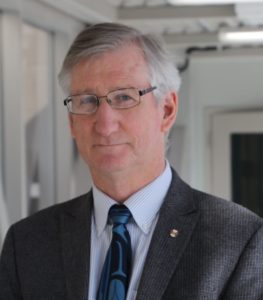
Bruce Gaulin
Bruce D. Gaulin has been a faculty member at McMaster University since 1988, where he is currently Brockhouse Chair in the Physics of Materials and Director of the Brockhouse Institute for Materials Research. He received his BSc in Physics from McGill, before going on to McMaster for his PhD, working in neutron scattering studies of quantum materials – worked performed mainly at the Chalk River Laboratories. He has held sabbattical appointments at both Oak Ridge and Brookhaven National Labs in the USA. Prof. Gaulin served as President of the Canadian Institute for Neutron Scattering (1997-2003) and was elected President of the Neutron Scattering Society of America (2009-13).
A CAP member since his PhD days, Prof. Gaulin has served on CAP Council as a regional councilor (1990-92), Chair of DCMMP (1999-2000) and as Director of Academic Affairs (2006-09). He served as a member and Chair of NSERC GSC-28, and as NSERC Physics Group Chair (2010-13). He has served numerous science advisory roles in Canada and abroad, including on the Advisory Committee on TRIUMF (2006-10), as Chair of the Science Advisory Committee of the CLS (2004-08), and as Chair of Commission 10 (Structure and Dynamics of Condensed Matter) of IUPAP (2005-08).
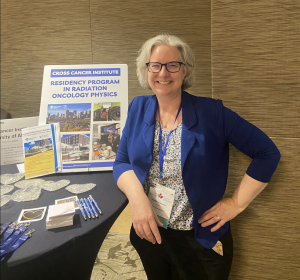
Heather Warkentin
Heather Warkentin is a Senior Medical Physicist with Cancer Care Alberta and serves as Program Director of the Cross Cancer Institute Residency Program in Radiation Oncology Physics. She is actively involved in advancing medical physics education and training at both the national and international levels. Within the Canadian Organization of Medical Physicists (COMP), Heather serves on the Education Committee and chairs the National Residency Program Directors Subcommittee. She is also an active volunteer with the American Association of Physicists in Medicine (AAPM), having previously served on the Work Group on Periodic Review of Medical Physics Residency Training and currently contributing as a member of the Radiation Oncology Medical Physics Education Subcommittee and the New Curriculum Committee. Passionate about education and lifelong learning, Heather recently completed a Doctor of Education (EdD) in Educational Leadership at Western University. Her interests span clinical practice, residency education, leadership development, and fostering the next generation of medical physicists.
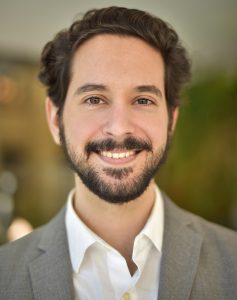
Matt Russo
Dr. Matt Russo is an astrophysicist, musician, and data sonification expert. He holds degrees in astrophysics and jazz guitar from the University of Toronto, where he teaches The Physics of Music. His work with SYSTEM Sounds has been featured in The New York Times and through NASA collaborations, and his TED Talk, What Does the Universe Sound Like? has reached audiences around the world.
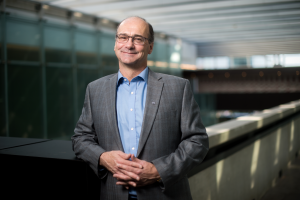
Robert Myers
Professor Robert Myers is a founding faculty member at Perimeter Institute and an adjunct professor at the University of Waterloo. His research focuses on string theory, quantum gravity, and quantum field theory, particularly the connections between quantum gravity and quantum information.
After receiving his PhD from Princeton University, he held a postdoctoral position at the University of California, Santa Barbara, and was a professor at McGill University before joining Perimeter in 2001. He has held numerous leadership roles at Perimeter, including serving as Executive Director from 2019 to 2024. Professor Myers is a Fellow of the Royal Society of Canada and has received many honours for his research and service, including the CAP Herzberg Medal, the CAP-TRIUMF Vogt Medal, and the CAP Medal for Lifetime Achievement in Physics.
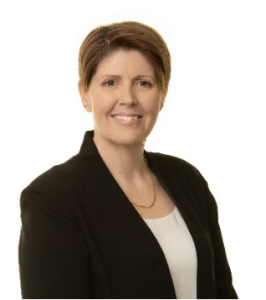
Karin Stephenson
Dr. Karin Stephenson is the Director of Nuclear Research and Education Support for Nuclear Operations and Facilities at McMaster University. Dr. Stephenson graduated with her PhD in Chemistry from McMaster University and completed postdoctoral fellowships in at both UPenn and CAMH PET Centres. She has more than 20 years of experience in nuclear research, radiochemistry, and radiopharmaceuticals.
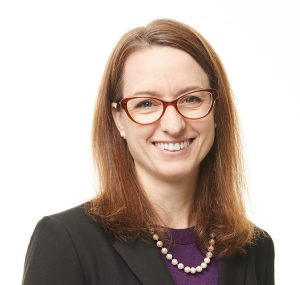
Laura Parker
Laura Parker is a Professor in the Department of Physics & Astronomy at McMaster University. Her research focuses on how galaxies evolve, particularly how environments such as galaxy groups and clusters influence star formation and gas. She works with large astronomical surveys and cosmological simulations and is also actively involved in graduate education and academic leadership at McMaster.
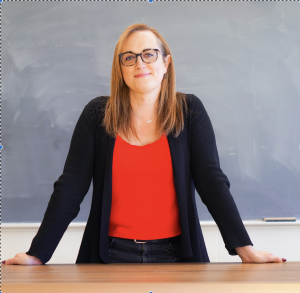
Gwen Grinyer
Dr. Gwen Grinyer is a Professor in the Department of Physics at the University of Regina in Saskatchewan, Canada. Her research spans a wide variety of topics in experimental nuclear physics including the structure of short-lived radioactive nuclei, rare modes of radioactivity, and nuclear astrophysics. She is a Fellow of the Canadian Association of Physicists (CAP) and is the President of the Canadian Institute of Nuclear Physics (CINP).
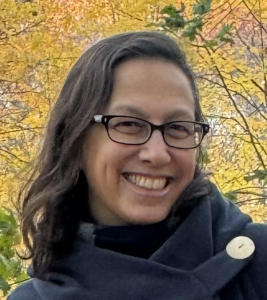
Cécile Fradin
Dr. Cécile Fradin is an experimental biophysicist and a professor at McMaster University. With her research team, she is investigating the dynamics of living cells using different fluorescence techniques. Current interest includes diffusion processes in complex media, body patterning in the early fly embryo and swimming of magnetic bacteria in the presence of magnetic fields. Beyond her research, she is dedicated to biophysics teaching, and has notably developed inquiry-based undergraduate biophysics labs, and explored using landmark biophysics papers to help improve critical thinking and gain a historical perspective. Dr. Fradin is involved with the Biophysical Society of Canada, currently serving as its vice-president.
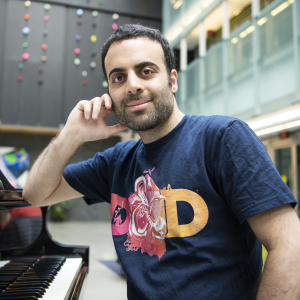
Barak Shoshany
Prof. Barak Shoshany (ħe/ħim) did his BSc in Mathematics and Physics at Tel Aviv University in Israel and his MSc and PhD in Quantum Gravity at Perimeter Institute for Theoretical Physics in Waterloo, ON. He is currently an Associate Professor of Physics at Brock University in St. Catharines, ON, where he won the Faculty of Mathematics and Science Award for Excellence in Teaching. He is also a Sessional Lecturer at McMaster University, teaching graduate-level scientific programming. His research, supported by the NSERC Discovery Grant, focuses on the nature of time and causality in general relativity and quantum mechanics, as well as symbolic and high-performance scientific computing. In his spare time he is also a multi-instrumentalist and composer.