CUPC 2026 Keynote Speakers
Bruce Gaulin
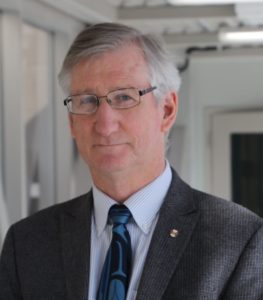
Bruce D. Gaulin has been a faculty member at McMaster University since 1988, where he is currently Distinguished University Professor and Brockhouse Chair in the Physics of Materials. He is also Director of the Canadian Neutron Beam Laboratory and was formerly Director of the Brockhouse Institute for Materials Research. He received his BSc in Physics from McGill, before going on to McMaster for his PhD, working in neutron scattering studies of quantum materials – which has remained his research specialty. He has held sabbatical appointments at both Oak Ridge and Brookhaven National Labs in the USA, as well as Universite Paris-Saclay in France. Prof. Gaulin served as President of the Canadian Institute for Neutron Scattering (1997-2003) and was elected President of the Neutron Scattering Society of America (2009-13). He has been recognized with several research recognitions including both Alfred P. Sloan and Killam Fellowships, Fellowship in the Canadian Association of Physicist (CAP), the American Physical Society and the Royal Society of Canada as well as both the CAP Brockhouse Medal (for excellence in condensed matter physics, 2011) and the CAP Gold Medal for Lifetime Achievement in Physics (2026).
A CAP member since his PhD days, Prof. Gaulin has served on CAP Council as a regional councillor (1990-92), Chair of DCMMP (1999-2000), Director of Academic Affairs (2006-09) and on the CAP Presidential Line, ultimately serving as President of CAP in 2018-2019 . He has served numerous science advisory roles in Canada and abroad, including on the Advisory Committee on TRIUMF (2006-10), as Chair of the Science Advisory Committee of the Canadian Light Source (2004-08), and as Chair of Commission 10 (Structure and Dynamics of Condensed Matter) of IUPAP (2005-08).
Anastasia Smolina
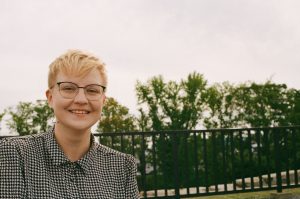
Anastasia Smolina is a PhD Candidate in Medical Biophysics at the University of Toronto, where her doctoral research uses advanced ultrasound and MR imaging to study placental function, fetal physiology, and adverse pregnancy outcomes. She is a McMaster alum, having completed a Combined Honours degree in Arts & Science and Physics. She has worked on EDI in science initiatives for over ten years, including chairing the 2017 CCUWiP when it was hosted at McMaster and co-chairing the Canadian Association of Physicists EDI Committee. During the Covid-19 pandemic she and Dr. Kevin Hewitt created CanPhysCounts, the first national survey of the Canadian physics community, examining representation, experiences, and systemic inequities in Canadian physics. She has since been collaborating with the Laurier Centre for Women in Science (WinS) on data analysis and preparations for a follow-up survey.
Arthur B. McDonald
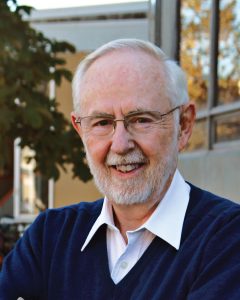
Arthur McDonald is a native of Sydney, Nova Scotia, Canada and has degrees in physics from Dalhousie University (BSc, MSc) and Caltech (PhD) and fifteen honorary degrees. From 1969-1982 he was a Research Officer at AECL Chalk River Laboratories; 1982-1989, Professor at Princeton University; 1989-2006 Professor at Queen’s University, Kingston, Canada; 2006-2013 Gray Chair in Particle Astrophysics, 2013- Gray Chair Emeritus. He was the Director of the Sudbury Neutrino Observatory (SNO) experiment, for which he received the 2015 Nobel Prize in Physics and the 2016 Breakthrough Prize in Fundamental Physics with the SNO Collaboration. He is a Companion of the Order of Canada and the recipient of the
Cocconi Prize of the European Physical Society, the Franklin Medal, the Herzberg Medal and the Killam Prize. He is a Fellow of the Royal Society (UK), Royal Society of Canada, American Physical Society, Can. Assoc. of Physics and AAAS. Prof. McDonald continues to be active in basic research on Neutrinos and Dark Matter.
Christopher Malcolmson
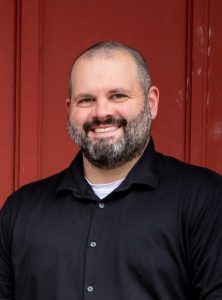
Chris Malcolmson is Acting Health Physics Director at McMaster University, providing radiation safety and emergency preparedness support for the safe operation of their research reactor, Class II Facilities, and more than 1,200 individuals that perform radiological work under CNSC licenses used on and off campus. He obtained both his Bachelor’s and Master’s degrees in Health Physics from McMaster and has been working in this field for over 20 years. Additionally, as the President of Sparkable Radiation Safety, he provides consulting services regarding the safe use of nuclear technology across the nuclear industry. He is also a Registered Radiation Safety Professional with the CRPA, a Certified Health Physicist with the American Board of Health Physics and National Registered Radiation Protection Technologist in Canada. He has experience in health physics, licensing, regulatory affairs, radiological waste management, emergency preparedness, environmental safety, and power generation at large and small nuclear facilities in Canada. Chris has experience working as a health physicist and in radiation protection management ranging from industry and nuclear medicine to nuclear power generation and radiological waste management.
CUPC 2026 Panelists
Medical and Biological Physics
Heather Warkentin
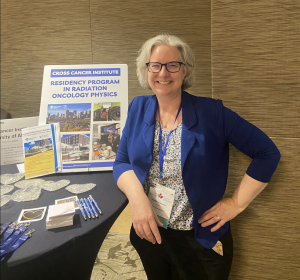
Heather Warkentin is a Senior Medical Physicist with Cancer Care Alberta and serves as Program Director of the Cross Cancer Institute Residency Program in Radiation Oncology Physics. She is actively involved in advancing medical physics education and training at both the national and international levels. Within the Canadian Organization of Medical Physicists (COMP), Heather serves on the Education Committee and chairs the National Residency Program Directors Subcommittee. She is also an active volunteer with the American Association of Physicists in Medicine (AAPM), having previously served on the Work Group on Periodic Review of Medical Physics Residency Training and currently contributing as a member of the Radiation Oncology Medical Physics Education Subcommittee and the New Curriculum Committee. Passionate about education and lifelong learning, Heather recently completed a Doctor of Education (EdD) in Educational Leadership at Western University. Her interests span clinical practice, residency education, leadership development, and fostering the next generation of medical physicists.
Cécile Fradin
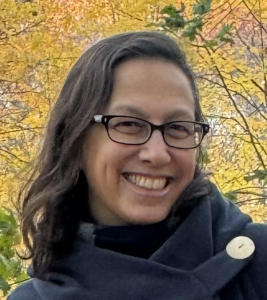
Dr. Cécile Fradin is an experimental biophysicist and a professor at McMaster University. With her research team, she is investigating the dynamics of living cells using different fluorescence techniques. Current interest includes diffusion processes in complex media, body patterning in the early fly embryo and swimming of magnetic bacteria in the presence of magnetic fields. Beyond her research, she is dedicated to biophysics teaching, and has notably developed inquiry-based undergraduate biophysics labs, and explored using landmark biophysics papers to help improve critical thinking and gain a historical perspective. Dr. Fradin is involved with the Biophysical Society of Canada, currently serving as its vice-president.
Kari Dalnoki-Veress
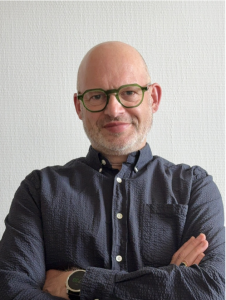
Kari Dalnoki-Veress is Faculty of Science Research Chair in Experimental Soft Condensed Matter Physics in the Department of Physics and Astronomy at McMaster University, and an Adjunct Professor at the ESPCI in Paris. An experimental physicist with a passion for soft condensed matter, teaching, and entrepreneurship, he leads a research group focused on fundamental experiments in soft and living matter at surfaces and interfaces. His research spans thin polymer and elastomeric films, elastocapillary and wetting phenomena, and droplet-based granular systems. He is also cofounder and CTO of MesoMat Inc., a VC-backed company developing advanced sensing technologies and cloud-based analytics. At MesoMat, he directs the core scientific breakthroughs behind the company’s sensor architecture.
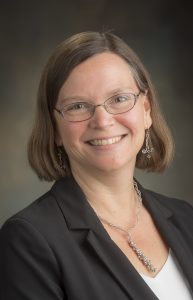
Nancy Forde
Nancy Forde is a Professor of Physics at Simon Fraser University, in Burnaby, British Columbia, Canada. She earned an Honours BSc in Chemical Physics (minor in Mathematics) from the University of Toronto, and a PhD in Chemistry from the University of Chicago. She entered the field of Biophysics in postdoctoral work at UC Berkeley with Carlos Bustamante. Her research interests lie in molecular biophysics, where her research group explores the molecular basis for collagen mechanics and stability. Dr. Forde has received many awards throughout her career, including a Michael Smith for Health Research Scholar award, university teaching and supervision awards, the Michèle Auger Award from the Biophysical Society of Canada, a teaching medal from the Canadian Association of Physicists, a Cottrell Scholar award and being named a Fellow of the American Physical Society.
Health and Nuclear Physics
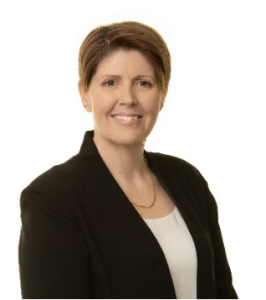
Karin Stephenson
Dr. Karin Stephenson is the Director of Nuclear Research and Education Support for Nuclear Operations and Facilities at McMaster University. Dr. Stephenson graduated with her PhD in Chemistry from McMaster University and completed postdoctoral fellowships in at both UPenn and CAMH PET Centres. She has more than 20 years of experience in nuclear research, radiochemistry, and radiopharmaceuticals.
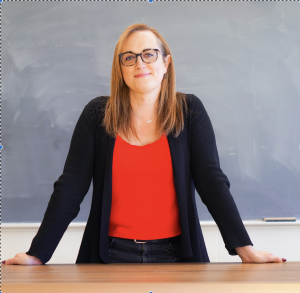
Gwen Grinyer
Dr. Gwen Grinyer is a Professor in the Department of Physics at the University of Regina in Saskatchewan, Canada. Her research spans a wide variety of topics in experimental nuclear physics including the structure of short-lived radioactive nuclei, rare modes of radioactivity, and nuclear astrophysics. She is a Fellow of the Canadian Association of Physicists (CAP) and is the President of the Canadian Institute of Nuclear Physics (CINP).
Andrew Erlandson
Andrew Erlandson is a particle physicist and Section Head based at Canadian Nuclear Laboratories in Chalk River, Ontario and an adjunct professor with the Department of Physics at Carleton University. He obtained a B.Sc. in physics from the University of Ottawa, and his M.Sc. and Ph.D. from Carleton University. His PhD research focused on solar neutrino physics using the DEAP-3600 detector wherein his work contributed to the first observation of solar neutrino absorption on argon. His research portfolio consists of both fundamental and applied physics. He has been involved in applied muon physics for over 15 years and contributed to the development and demonstration of novel techniques and reconstruction methods. His applied research also includes methods of remotely monitoring nuclear reactors and spent nuclear fuel through their antineutrino emissions. Andrew is involved with several collaborations including DEAP, ARGO, COHERENT, HALO, KDK+, and CRUST. He is also the principal investigator for the COSMO experiment which is working to deploy high resolution muon trackers at SNOLAB to probe both the residual flux of cosmic ray muons at depths beyond 6 km.w.e and hadronic physics in Earth’s atmosphere.
Diana Moscu
Astrophysics
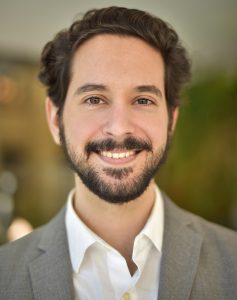
Matt Russo
Dr. Matt Russo is an astrophysicist, musician, and data sonification expert. He holds degrees in astrophysics and jazz guitar from the University of Toronto, where he teaches The Physics of Music. His work with SYSTEM Sounds has been featured in The New York Times and through NASA collaborations, and his TED Talk, What Does the Universe Sound Like? has reached audiences around the world.
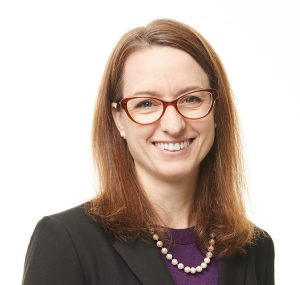
Laura Parker
Laura Parker is a Professor in the Department of Physics & Astronomy at McMaster University. Her research focuses on how galaxies evolve, particularly how environments such as galaxy groups and clusters influence star formation and gas. She works with large astronomical surveys and cosmological simulations and is also actively involved in graduate education and academic leadership at McMaster.
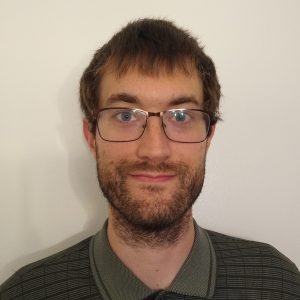
Paul Scholz
Dr. Paul Scholz is an Assistant Professor in Physics and Astronomy at York University. He is an astrophysicist whose research centers on observational studies of transient and variable phenomena, especially the enigmatic Fast Radio Burst phenomenon. He was granted a PhD degree in Physics from McGill University in 2015 for a thesis on X-ray observations of magnetars. Following his PhD, he was a Covington Postdoctoral Fellow at the Dominion Radio Astrophysical Observatory where he worked on the construction and commissioning of the CHIME Fast Radio Burst instrument. He was then a Dunlap Postdoctoral Fellow at the University of Toronto from 2019-2023. Since 2023, Scholz has been a professor leading a research group on fast transient studies at York.
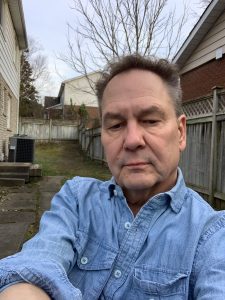
Brian McNamara
Brian McNamara is Professor and former department chair in Physics & Astronomy at the University of Waterloo, in Ontario, Canada and former Director of the Guelph-Waterloo Physics Institute. He was appointed University Research Chair for two terms between 2008 and 2022, and a Science Research Chair from 2023 to 2029. After receiving a PhD at the University of Virginia in 1991, McNamara took a postdoctoral fellowship at the Kapteyn Laboratory in Groningen, The Netherlands. From 1993 to 2000, he was a staff member at the Harvard-Smithsonian Center for Astrophysics. From 2000 to 2006, McNamara was a professor of Physics & Astronomy at Ohio University. McNamara has served as a professor of Physics & Astronomy at University of Waterloo since 2006.
McNamara studies galaxies and clusters of galaxies and spends his days trying to explain how they formed and evolved under the influence of powerful radio jets launched by supermassive black holes. His most recent work involves making the first measurements of the velocity fields of hot X-ray cluster atmospheres with the XRISM X-ray observatory and studying cold clouds accreting onto massive black holes using the James Webb Space Telescope. McNamara served on the XRISM X-ray science team representing Canada and the Resolve instrument team, which is XRISM’s micro-calorimeter spectrometer.
Mathematical and Theoretical Physics
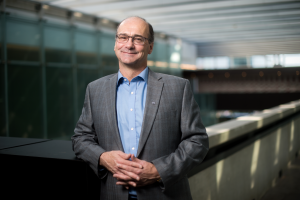
Robert Myers
Professor Robert Myers is a founding faculty member at Perimeter Institute and an adjunct professor at the University of Waterloo. His research focuses on string theory, quantum gravity, and quantum field theory, particularly the connections between quantum gravity and quantum information.
After receiving his PhD from Princeton University, he held a postdoctoral position at the University of California, Santa Barbara, and was a professor at McGill University before joining Perimeter in 2001. He has held numerous leadership roles at Perimeter, including serving as Executive Director from 2019 to 2024. Professor Myers is a Fellow of the Royal Society of Canada and has received many honours for his research and service, including the CAP Herzberg Medal, the CAP-TRIUMF Vogt Medal, and the CAP Medal for Lifetime Achievement in Physics.
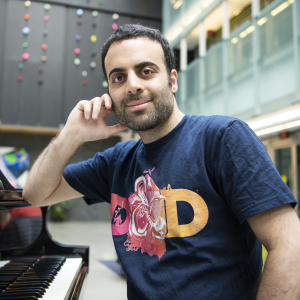
Barak Shoshany
Prof. Barak Shoshany (ħe/ħim) did his BSc in Mathematics and Physics at Tel Aviv University in Israel and his MSc and PhD in Quantum Gravity at Perimeter Institute for Theoretical Physics in Waterloo, ON. He is currently an Associate Professor of Physics at Brock University in St. Catharines, ON, where he won the Faculty of Mathematics and Science Award for Excellence in Teaching. He is also a Sessional Lecturer at McMaster University, teaching graduate-level scientific programming. His research, supported by the NSERC Discovery Grant, focuses on the nature of time and causality in general relativity and quantum mechanics, as well as symbolic and high-performance scientific computing. In his spare time he is also a multi-instrumentalist and composer.
Cliff Burges
I was born in Manitoba and was raised in various places around Western Canada, Ontario, and Europe.
I received my B.Sc. in a co-op programme, with a joint honours in Physics and Applied Math from the University of Waterloo. I did my doctoral work in Theoretical Particle Physics at the University of Texas in Austin under the supervision of Steven Weinberg.
After doing a short postdoctoral stint at the Institute for Advanced Study in Princeton, in 1987 I joined the faculty at McGill University, where I was made James McGill Professor in 2003. I am presently a professor with McMaster University’s Department of Physics and Astronomy and am an Associate Faculty Member at Perimeter Institute for Theoretical Physics. I have spent sabbatical years with the Institute for Advanced Study in Princeton as well as the University of Neuchatel and CERN in Switzerland.
I was a Killam Fellow from 2005 – 2007 and elected a fellow of the Royal Society of Canada in 2008. I received the Canadian Association of Physicists/Centre de Recherches Mathematiques (CAP-CRM) prize for theoretical physics in 2010, and three of my papers have won a Buchalter Cosmology Prize (3rd place in 2016 and again in 2017 and 2nd place in 2025). I have written two textbooks (The Standard Model: A Primer and Introduction to Effective Field Theory, both published by Cambridge University Press). The second of these was named Best Book in Physics and Chemistry by the American Publishers Association in 2021.
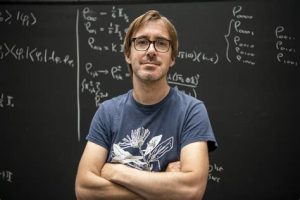
Kevin Costello
Kevin Costello is a mathematical physicist working at the Perimeter Institute in Waterloo, Ontario. His work is concerned with the mathematics of quantum field theory.
EDII